Esperanto
 Shqiptare
 Euskara
 Zulu
Zulu
 Latinus
 Cymraeg
 தமிழ்
தமிழ்
 Slovak
 Slovak
 Afrikaans





Steel fiber manufacturer China: how to choose a reliable supplier for construction projects
Sep 14,2026
Zhitai Steel Fiber
Article overview
This guide covers how US procurement engineers can identify, evaluate, and verify a steel fiber manufacturer China—including compliance standards, cost breakdowns, fiber selection, and factory audit strategies. Estimated reading time: 12 minutes.
Table of contents
- 1. What is a steel fiber manufacturer China?
- 2. Why China dominates global steel fiber supply
- 3. How to evaluate supplier qualifications and certifications
- 4. Understanding ASTM A820 and ACI 318 compliance for US buyers
- 5. Total landed cost analysis: what US buyers often miss
- 6. Choosing the right fiber type for your application
- 7. Quality verification: audits, MTCs, and third-party testing
- 8. Real project case studies from North American job sites
- 9. FAQ
What is a steel fiber manufacturer China?
A steel fiber manufacturer China is a factory-based producer operating within China that manufactures metallic reinforcement fibers—such as hooked-end, crimped, or milled steel fibers—for integration into concrete mixes to improve toughness, crack resistance, and load-bearing performance. These manufacturers range from small regional factories to large industrial producers exporting to over 50 countries, making China the single largest source of steel fiber for concrete reinforcement globally.
The term encompasses a broad spectrum of operations. Some facilities specialize exclusively in cold-drawn hooked end steel fiber for industrial floors; others run integrated lines producing micro steel fiber for UHPC (ultra-high performance concrete) alongside standard SFRC steel fiber reinforced concrete grades. According to recent 2026 industry data, Chinese factories account for more than 60% of global steel fiber production capacity—a dominance that reflects both raw material access and decades of manufacturing scale-up.
Why does this matter to a US procurement engineer? Because not every Chinese steel fiber factory is equal. Certifications, tensile strength tolerances, aspect ratio consistency, and export compliance vary widely. Understanding what separates a credible industrial steel fiber producer from a low-cost commodity supplier is the foundation of any sound sourcing decision.
Key product categories produced by Chinese manufacturers
Chinese factories produce the full range of steel reinforcement fiber types. Cold-drawn wire fibers—especially hooked end steel fiber with an aspect ratio (L/D) between 60 and 80—remain the dominant export category to North America. Milled steel fibers, produced by milling high-carbon steel billets, offer high tensile strength (often exceeding 1,000 MPa) and rough surface texture for superior concrete bonding. Increasingly, manufacturers are producing recycled steel fiber derived from tire wire, targeting the growing green construction segment in the US market.
How product naming and specs work in practice
Standard product codes like "RC 80/60BN" follow a straightforward convention: 80 refers to the aspect ratio (L/D), 60 is the fiber length in millimeters, and BN denotes the raw material grade (normal tensile). When evaluating any Chinese steel fiber supplier, always request the full technical data sheet confirming length tolerance (±10%), diameter tolerance (±0.05 mm), and minimum tensile strength—typically ≥1,050 MPa for standard grades.
Why China dominates global steel fiber supply
China's position as the world's leading steel fiber supplier China stems from structural advantages that competitors simply cannot replicate at equivalent cost. The country produces over 50% of the world's crude steel, giving domestic fiber manufacturers direct access to low-cost raw wire rod—the primary input material. Combine that with established cold-drawing infrastructure, a dense supplier ecosystem in provinces like Hebei, Jiangsu, and Shandong, and aggressive investment in export-oriented production, and the result is a supply base that consistently undercuts European and US domestic pricing by 30–50%.
The 2026 manufacturing landscape
Two shifts are reshaping the Chinese steel fiber factory landscape in 2026. First, the green transition: demand for recycled steel fiber—manufactured from recovered tire steel cord—has surged as US and EU construction specifications increasingly include sustainability scoring. Chinese producers are investing heavily here. Second, UHPC growth: as US bridge rehabilitation and high-rise construction adopt ultra-high performance concrete, demand for fine-diameter micro steel fiber (≤0.2 mm) and high-tensile grades (≥2,000 MPa) is growing fast. Leading Chinese factories have responded with dedicated UHPC production lines, positioning them as credible OEM steel fiber manufacturers for premium applications.
Scale advantages that translate to buyer value
Think of bulk steel fiber wholesale sourcing from China like buying directly from an integrated steel mill versus a regional service center—the margin compression at the factory level is passed downstream. Minimum order quantities (MOQ) from Chinese factories typically start at 1–5 metric tons for standard grades, with full-container loads (FCL, ~20 MT) unlocking the best per-ton pricing. For US buyers running large slab or tunnel projects, this scale accessibility is a genuine competitive advantage over domestic alternatives.

How to evaluate supplier qualifications and certifications
The first thing to verify when assessing any steel fiber manufacturer China is the certification stack. A credible industrial steel fiber producer will hold, at minimum, ISO 9001 quality management certification and be able to provide CE marking documentation for products destined for international markets. For US-specific procurement, ASTM A820 compliance is the non-negotiable baseline—more on that in the next section.
Qualification checklist for US procurement engineers
- Request ISO 9001 certificate with current validity date and issuing body name
- Ask for mill test certificates (MTC) for the last three production batches
- Confirm ASTM A820 Type I or Type V classification in writing
- Verify export history to North America (references, bill of lading records)
- Request third-party lab test reports (tensile strength, aspect ratio, dimensional tolerance)
- Evaluate factory audit capacity: do they accept SGS, Bureau Veritas, or Intertek inspections?
- Assess production capacity relative to your project volume—under-capacity factories introduce schedule risk
Red flags that indicate a trading company, not a manufacturer
Many listings on B2B platforms represent trading companies reselling fiber, not actual Chinese steel fiber factories. Red flags include inability to provide production-floor photos with branded equipment, refusal to share factory audit reports, vague answers about raw material sourcing, and MOQs that suggest aggregated rather than direct production. Actual manufacturers will typically offer OEM steel fiber manufacturer services—meaning they can produce custom fiber dimensions, coatings, and packaging under your specification. Traders generally cannot.
Understanding ASTM A820 and ACI 318 compliance for US buyers
ASTM A820 is the governing US standard for steel fibers used in fiber-reinforced concrete, and it is the specification most US structural engineers will cite in project documents. Understanding its requirements—and how to verify compliance from a Chinese supplier—is a critical skill that surprisingly few procurement guides address.
ASTM A820 fiber classifications
| Type | Description | Minimum tensile strength | Common application |
|---|---|---|---|
| Type I | Cold-drawn wire | 345 MPa (50 ksi) | Industrial floors, SFRC slabs |
| Type II | Cut sheet or flat sheet | 345 MPa (50 ksi) | Precast elements |
| Type III | Milled from steel block | 345 MPa (50 ksi) | High-performance overlays |
| Type V | Cold-drawn, deformed | 1,000 MPa (145 ksi) | Tunnel lining, UHPC |
ACI 318-19 (Building Code Requirements for Structural Concrete) references SFRC in provisions for structural slabs and seismic applications. For a US project requiring ACI compliance, the engineer of record will typically specify both the fiber type per ASTM A820 and a minimum residual strength class per ASTM C1609. Always obtain both test reports from your Chinese steel fiber supplier before submitting products for project approval.
"Steel fiber reinforced concrete designed to ASTM A820 and tested per ASTM C1609 can reduce slab thickness by 20–30% versus conventionally reinforced slabs, delivering significant material savings on large-footprint industrial projects." — ACI Committee 544 Report on Fiber Reinforced Concrete
How to request compliance documentation from Chinese factories
Ask explicitly for ASTM A820 Type classification in the product datasheet, not just "meets international standards"—a phrase that means nothing in a US project specification context. Third-party lab reports from accredited US or European testing laboratories (AASHTO-accredited preferred) carry far more weight with American structural engineers than in-house Chinese factory test reports. Reputable concrete fiber reinforcement China suppliers understand this and maintain current third-party test packages for their key export grades.
Total landed cost analysis: what US buyers often miss
Factory price is only one part of the equation. Experienced procurement teams know that the true cost of sourcing from a steel fiber manufacturer China only becomes clear when you build out the full landed cost model—and several line items consistently catch first-time importers off guard.
HTS code and import duties
Steel fibers for concrete reinforcement are classified under HTS code 7217.20 (iron or steel wire, plated or coated with zinc) or 7217.90 depending on the specific product finish. As of 2026, Section 301 tariffs imposed post-2018 remain in effect for most Chinese steel wire products, adding 25% to the declared customs value. This single line item can erase 40–60% of the apparent factory price advantage if not modeled correctly. Some suppliers offer DDP (Delivered Duty Paid) Incoterms—useful for budget certainty, though it typically means the supplier builds in a margin over the actual duty cost.
Shipping lead times and logistics costs
Transit time from major Chinese ports (Tianjin, Shanghai, Ningbo) to US West Coast ports (Long Beach, Los Angeles) averages 14–18 days; East Coast destinations (Savannah, Houston) add 7–10 days. Port congestion and peak-season surcharges mean smart buyers build 4–6 weeks of schedule buffer. Ocean freight for a 20-foot container (approximately 20 MT of steel fiber) runs $1,800–$3,500 depending on route and market conditions, adding $90–$175 per metric ton to landed cost. Add inland drayage, warehouse fees, and customs brokerage, and total logistics typically add $200–$400/MT beyond the FOB factory price.
Sample landed cost model (per metric ton, 2026 estimates)
| Cost component | Estimated range (USD/MT) |
|---|---|
| FOB factory price (hooked-end, standard grade) | $650 – $900 |
| Section 301 tariff (25% on declared value) | $163 – $225 |
| Ocean freight + port charges | $110 – $175 |
| Inland drayage + customs brokerage | $60 – $120 |
| Estimated total landed cost | $983 – $1,420 |
Even at the high end, this compares favorably to US domestic high-performance steel fiber pricing of $1,600–$2,200/MT for equivalent ASTM A820 Type I grades—but the gap is narrower than the factory price alone suggests. Build your model before committing to volume.
Choosing the right fiber type for your application
Fiber selection is where many procurement decisions go wrong—not because the product is defective, but because the wrong fiber type was specified for the application. Steel fiber tensile strength matters less than the combination of geometry, aspect ratio, and dosage rate relative to your concrete mix design.
Application-based fiber selection guide
| Application | Recommended fiber type | Typical dosage | Key spec |
|---|---|---|---|
| Industrial floor slab | Hooked-end (RC 80/60) | 25–40 kg/m³ | L/D ≥ 60, ≥1,050 MPa |
| Tunnel lining | Hooked-end or crimped | 35–60 kg/m³ | ASTM A820 Type V, ≥1,000 MPa |
| Precast elements | Milled or paddled-end | 20–40 kg/m³ | Consistent L/D, low clumping rate |
| UHPC bridge deck / overlay | Micro steel fiber (≤0.2 mm dia.) | 120–180 kg/m³ | ≥2,000 MPa tensile, smooth surface |
One point worth highlighting: the industry misconception that "more fiber equals better performance" is genuinely harmful. Actual testing confirms that dosage rates above approximately 80 kg/m³ for standard concrete mixes begin to reduce workability, increasing the risk of balling and uneven distribution. Match dosage to the concrete mix design, not to a generalized "higher is better" instinct. For steel fiber concrete mix design assistance, reputable Chinese suppliers—especially those serving OEM steel fiber manufacturer clients—will provide mix design support as part of the technical service package.
How to handle fiber selection for non-standard projects
For applications outside the standard matrix above—say, blast-resistant walls, shotcrete in mining, or reactive powder concrete—request samples and run trial mixes before committing to volume. This is standard practice. Any credible steel fiber distributor USA or direct Chinese exporter should accommodate sample requests for qualified project opportunities. Actual testing is irreplaceable; published datasheets reflect ideal conditions, not your specific mix, curing regime, or placement method.
Quality verification: audits, MTCs, and third-party testing
This is the area where most competitor guides fall completely silent—and where US buyers are most exposed to risk. Verifying quality from a Chinese steel fiber factory requires a layered approach: document review, third-party inspection, and ongoing batch testing.
Three-layer verification framework
- Mill test certificates (MTC): Request heat-specific MTCs for each production batch. Verify tensile strength, chemical composition (carbon content, sulfur/phosphorus limits), and dimensional tolerances. Authentic MTCs carry the factory quality stamp and production date.
- Pre-shipment inspection (PSI): Commission SGS, Bureau Veritas, or Intertek to conduct a pre-shipment inspection covering quantity verification, visual defects, random dimensional checks, and packaging integrity. Cost is typically $300–$600 per inspection—trivial against container values of $15,000–$25,000.
- Arrival testing: For first orders or new SKUs, send samples to an AASHTO-accredited US lab for independent verification of tensile strength and aspect ratio. This creates a baseline for ongoing supply monitoring.
Remote factory audit options
Can't travel to China? Remote audits via video walkthrough with a local inspection agent are now standard practice post-2020. A structured remote audit should cover: raw material storage, wire drawing equipment calibration records, quality control testing station documentation, and finished goods inspection area. Many leading Chinese industrial steel fiber producers have pre-prepared audit packages for US and European buyers—if a supplier resists a remote audit request, that itself is disqualifying information. Of course, there are situations where a supplier may genuinely lack the audit infrastructure not due to poor quality but due to organizational immaturity—in which case, require third-party MTC verification as the compensating control.
Real project case studies from North American job sites
Theory is useful. Numbers from real projects are more convincing. The following cases reflect outcomes reported by procurement engineers using Chinese-sourced steel fiber reinforcement on North American projects.
Case 1: warehouse floor slab, Texas distribution center (2025)
A 450,000 sq ft distribution center in the Dallas–Fort Worth area specified SFRC steel fiber reinforced concrete using hooked-end fiber (RC 80/60BN) sourced from a Hebei-based manufacturer. Dosage: 30 kg/m³. Compared to the original design using welded wire reinforcement (WWR), the SFRC design reduced slab thickness from 7 inches to 6 inches. Material cost savings: approximately $0.38/sq ft on slab material and $0.22/sq ft on labor (elimination of WWR placement). Total project savings: approximately $270,000. The fiber landed at approximately $1,100/MT including duties and freight—within budget versus the original WWR specification.
Case 2: precast tunnel segments, northeastern US transit authority (2024–2025)
A transit authority producing precast tunnel segments evaluated two Chinese suppliers alongside one domestic US source. The selected Chinese concrete fiber reinforcement China supplier provided ASTM A820 Type V certified milled fiber with third-party SGS inspection reports and AASHTO-accredited tensile test results. Per-segment fiber cost was 22% below the domestic quote. Quality acceptance rate on first delivery: 98.7% (within specification tolerance). The procurement team noted that requiring ASTM-specific documentation upfront eliminated two of five initial Chinese candidates who could not provide compliant test packages.
FAQ
Q: What certifications should a steel fiber manufacturer China hold for US projects?
A: At minimum, ISO 9001 for quality management and ASTM A820 compliance documentation (Type I or Type V depending on application). For structural projects, also request ASTM C1609 residual strength test results from an AASHTO-accredited lab. CE marking is useful but not sufficient for US code compliance on its own.
Q: What is the import duty on steel fiber from China to the US in 2026?
A: Most steel fiber products fall under HTS 7217.20 or 7217.90 and are subject to a 25% Section 301 tariff as of 2026, in addition to standard MFN duties. Always confirm the applicable HTS code with your customs broker before importing, as misclassification is a common and costly error.
Q: What is a typical MOQ for bulk steel fiber wholesale from China?
A: Most factories set MOQs between 1 and 5 metric tons for standard hooked-end grades. A full 20-foot container holds roughly 18–22 MT and unlocks the best pricing. For OEM or custom specifications, expect higher MOQs of 10–20 MT and 4–6 weeks additional lead time for tooling or wire die adjustments.
Q: How do I verify quality remotely when auditing a Chinese steel fiber factory?
A: Commission a pre-shipment inspection through SGS, Bureau Veritas, or Intertek. Supplement this with a video walkthrough audit covering raw material handling, drawing equipment calibration logs, and in-process QC records. Request AASHTO-accredited third-party tensile test reports for the specific production batch rather than generic catalog data.
Q: Is Chinese steel fiber quality comparable to European or US-made product?
A: For leading Chinese industrial steel fiber producers with verified ISO 9001 and ASTM A820 compliance, product quality is directly comparable to European grades. The key is supplier selection and verification—not country of origin. Independent lab testing consistently shows top-tier Chinese hooked end steel fiber meeting or exceeding published tensile strength and dimensional specifications.
Closing summary
Sourcing from a steel fiber manufacturer China represents a legitimate, cost-effective strategy for US construction procurement—provided the process is approached with rigor. The core disciplines are straightforward: verify certifications against US standards (ASTM A820, ACI 318), build a complete landed cost model that accounts for Section 301 tariffs and logistics, match fiber type to application rather than defaulting to the cheapest available grade, and layer your quality verification with third-party MTCs, pre-shipment inspection, and arrival testing. For more background on steel fiber reinforcement fundamentals, Wikipedia's technical overview provides a solid baseline before diving into supplier specifications.
The 2026 market offers more qualified Chinese steel fiber suppliers than ever—including factories producing high-performance micro steel fiber and recycled-content grades that meet both structural and sustainability requirements. The engineering and procurement teams that build systematic supplier evaluation frameworks will consistently outperform those relying on price alone. That is the core takeaway: process quality in supplier selection predicts product quality in the field.
If you are interested, please contact us!
Related News


Focus on us
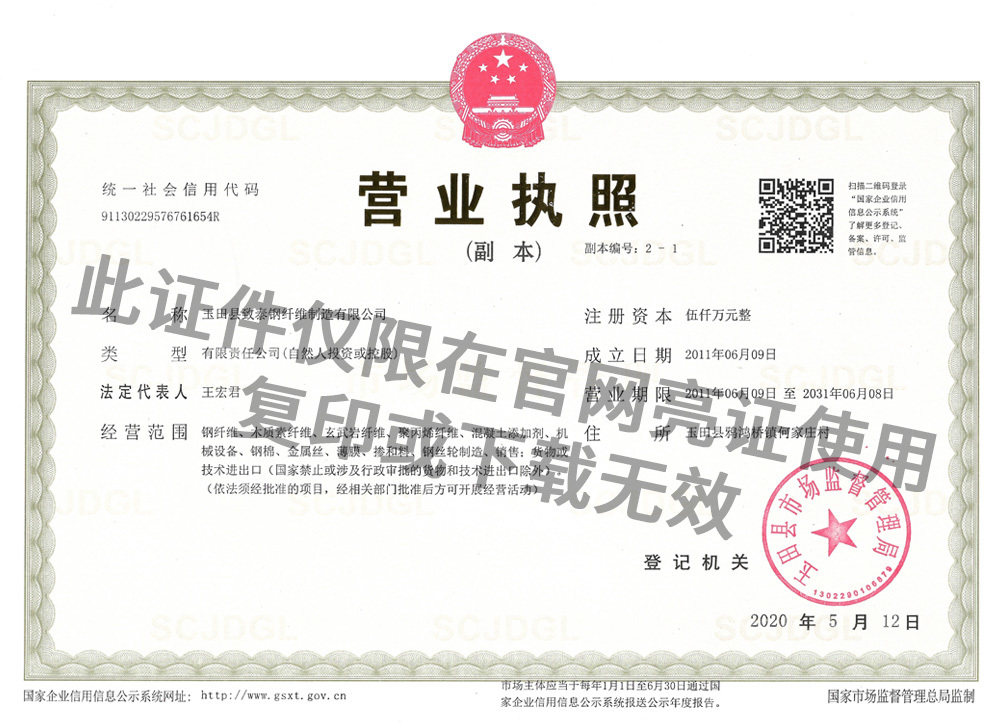
Copyright © Zhitai Steel Fiber Manufacturing Co., Ltd. |  冀公网安备 13022902000319号 | Powered by www.300.cn | SEO | Business License | Privacy Policy