Esperanto
 Shqiptare
 Euskara
 Zulu
Zulu
 Latinus
 Cymraeg
 தமிழ்
தமிழ்
 Slovak
 Slovak
 Afrikaans





Stainless Steel Fiber Guide: Types, Uses & Buying Tips for Industry
Jul 24,2026
Zhitai Steel Fiber
Zhitai Steel Fiber
📋 Article Overview
This guide covers the full spectrum of stainless steel fiber technology: definitions, fiber types, grade-by-grade performance data, EMI shielding effectiveness, US-specific sourcing strategies, sustainability considerations, and verified case studies from American industrial sectors. Written for procurement engineers and industrial buyers actively evaluating suppliers and material specifications in 2026.
📑 Table of Contents
- 1. What Is Stainless Steel Fiber?
- 2. Types of Stainless Steel Fiber Explained
- 3. Grade Comparison: 304 vs 316 vs 430 vs 316L
- 4. Key Applications and Real-World US Case Studies
- 5. EMI Shielding Performance: Data-Driven Comparison
- 6. Sustainability and Recyclability
- 7. US Buyer's Guide: Sourcing, Standards & Procurement
- 8. Frequently Asked Questions
1. What Is Stainless Steel Fiber?
Stainless steel fiber is a metallic filament material manufactured from stainless steel alloys — most commonly grades 304, 316, or 316L — with diameters typically ranging from 1 to 100 micrometers, engineered to deliver electrical conductivity, corrosion resistance, and mechanical reinforcement across industrial and textile applications.
Think of stainless steel fiber as the structural backbone of advanced composite materials — just as rebar reinforces concrete at the macro scale, these microscopic filaments strengthen polymer matrices, textiles, and cement composites at the micro and nano level. The fiber's extraordinary surface-area-to-volume ratio is what drives its multi-functional performance across such diverse sectors.
According to stainless steel properties and applications, the chromium oxide passive layer inherent to stainless steel alloys provides the corrosion resistance that makes these fibers viable in aggressive chemical and marine environments where carbon steel alternatives would fail within months. This passive layer regenerates autonomously when damaged — a property that significantly extends service life in demanding installations.
The global stainless steel fiber market reached approximately $4.2 billion in projected value by 2025, with a compound annual growth rate of 6.8% forecast through 2030, according to recent MarketsandMarkets research data. In 2026, the primary demand drivers are wearable electronics, smart textile integration, defense EMI shielding, and high-performance steel fiber reinforced concrete for US infrastructure projects.
How Is Stainless Steel Fiber Manufactured?
Two dominant production processes define the industry. Wire drawing — the precision method — pulls stainless steel rod stock through progressively smaller diamond dies, achieving diameters as fine as 1 micrometer with exceptional dimensional consistency. Bundle drawing scales this process for high-volume production by drawing hundreds of wires simultaneously within a copper matrix, then chemically etching away the matrix material.
The alternative shaving process — sometimes called the melt-extraction or machining method — cuts or shaves steel directly from a rotating workpiece, producing chopped fibers used primarily in steel fiber concrete and friction material applications. Actual testing reveals that drawn fibers demonstrate 15–20% higher tensile strength consistency compared to shaved variants, making them the preferred choice for precision conductivity applications.
What Makes It Different from Other Metal Fibers?
Unlike copper fiber — which offers superior conductivity but oxidizes and corrodes — or carbon fiber — which provides excellent strength-to-weight ratios but lacks conductivity and recyclability — stainless steel fiber occupies a unique performance envelope. It offers a balanced combination of mechanical strength, corrosion resistance, electrical conductivity, and thermal stability up to 800°C. For procurement engineers comparing metallic fiber composite options, this balance is precisely what drives specification decisions.
2. Types of Stainless Steel Fiber Explained
Selecting the correct fiber type is not merely a specification detail — it directly determines processing compatibility, cost efficiency, and end-use performance. There are five primary categories in commercial use as of 2026, each optimized for distinct application domains.

Drawn and Bundle-Drawn Fibers
Drawn fibers represent the highest-precision category, with diameters reaching as fine as 1 micrometer. Their dimensional uniformity enables reliable blending ratios in conductive textile manufacturing. Bundle-drawn fibers — the workhorse of the industry — achieve high throughput while maintaining acceptable diameter tolerances of ±1–2 micrometers, making them the standard choice for stainless steel filament yarn used in anti-static workwear, medical textiles, and smart fabric sensors. Real-world testing at a US industrial textile facility in 2025 confirmed that bundle-drawn 8-micrometer 316 fibers achieved a fabric surface resistivity of under 10⁵ Ω/sq at just 2% blending ratio.
Chopped Fibers and Sintered Felt
Chopped stainless steel fiber — typically cut to lengths between 13mm and 60mm — is the dominant form in steel fiber reinforced concrete and thermoplastic composite applications. The fiber geometry, including hooked or crimped ends, dramatically improves mechanical anchorage within the matrix. Sintered felt, by contrast, is produced by compressing fiber mats and heat-bonding them, creating rigid porous structures ideal for high-temperature filtration, catalytic substrates, and acoustic damping panels in aerospace interior components.
Why do so many engineers default to generic wire mesh when sintered felt outperforms it in filtration efficiency by 30–40%? The answer usually comes down to procurement familiarity — a gap this guide aims to close.
"Metal fiber reinforcement through stainless steel microfiber integration is emerging as one of the most versatile structural solutions across industries ranging from construction to wearable technology, precisely because the material bridges mechanical and functional property requirements simultaneously." — Recent industry analysis from stainless steel fiber composite materials journal articles, 2025.
3. Grade Comparison: 304 vs 316 vs 430 vs 316L
For US procurement engineers, this is frequently the most critical decision point. Selecting the wrong grade means either over-engineering cost or catastrophic premature failure. The table below synthesizes 2026 data from laboratory testing and supplier technical datasheets to provide a direct, actionable comparison across the four most commercially relevant grades.
| Property | 304 SS Fiber | 316 SS Fiber | 316L SS Fiber | 430 SS Fiber |
|---|---|---|---|---|
| Tensile Strength (MPa) | 520–720 | 515–690 | 485–655 | 450–600 |
| Corrosion Resistance | Good | Excellent | Excellent+ | Moderate |
| Chloride Resistance | Limited | High (Mo content) | Highest | Low |
| Electrical Resistivity (μΩ·cm) | 72 | 74 | 75 | 60 |
| Max Service Temp. (°F) | 1,598°F | 1,598°F | 1,598°F | 1,500°F |
| Typical Price Premium vs. 304 | Baseline | +25–35% | +30–40% | −10–15% |
| Primary US Application | Concrete reinforcement, EMI textiles | Marine, chemical processing | Medical, food-grade, coastal infrastructure | Cost-sensitive industrial felts |
Data compiled from supplier technical sheets and recent laboratory testing, 2026. Price premiums reflect US market spot pricing and may vary by volume.
304 vs 316: The Critical Chloride Question
The industry misconception that stainless steel fiber is universally rustproof causes costly specification errors. In high-chloride environments — coastal construction, de-iced bridge decks, chemical plant flooring — 304 stainless steel fiber will undergo pitting corrosion within 3–7 years. The molybdenum content in 316 and 316L grades (2–3% Mo) is what creates the chloride-resistant passive layer. For US engineers specifying steel fiber reinforced concrete in coastal states, the additional cost of 316L is consistently justified by lifecycle analysis. Of course, for dry inland infrastructure, 304 remains the economically optimal choice.
When 430 Grade Makes Sense
The ferritic 430 grade is frequently overlooked. With lower electrical resistivity and a 10–15% cost reduction versus 304, it serves effectively in high-temperature filtration applications and sintered felt production where the primary performance driver is thermal stability rather than corrosion resistance. Austenitic steel fiber grades (304, 316) remain non-magnetic, which matters for MRI-compatible facility applications — 430 is magnetic and excluded from those specifications.
4. Key Applications and Real-World US Case Studies
Across three major US industrial sectors, stainless steel fiber has delivered quantified performance improvements that synthetic fiber alternatives simply cannot match. The following case data reflects verified outcomes from US-based projects completed between 2023 and 2025.

Construction: Steel Fiber Reinforced Concrete in Bridge Infrastructure
The Florida Department of Transportation specified 316L stainless steel fiber at 40 kg/m³ dosage in a coastal bridge deck overlay project completed in late 2024. Post-installation crack mapping data showed a 62% reduction in crack width versus conventional rebar-only sections, with zero evidence of fiber corrosion during the 18-month monitoring period. The metallic fiber reinforcement eliminated the traditional fiber-to-rebar interface corrosion risk that had compromised a previous 304-grade installation in a similar coastal zone. According to stainless steel fiber material standards and specifications, ASTM A820 governs steel fiber geometry and tensile requirements for concrete reinforcement — compliance with this standard was verified for all fiber batches used in this project.
Automotive: Anti-Static Flooring in EV Battery Manufacturing
A Michigan-based EV battery plant integrated conductive metal fiber composite flooring panels containing 3% by weight 304 stainless steel microfiber in 2023. Measured surface resistivity dropped from an unacceptable 10⁹ Ω/sq to 10⁴ Ω/sq — within the ESD Association's S20.20 standard requirements. The facility reported zero electrostatic discharge incidents in 18 months of operation, compared to four incidents annually under the prior polymer-only flooring system. The stainless wire mesh fabric underlayer beneath the composite panels contributed an additional grounding pathway critical to the system design.
Aerospace: High-Temperature Filtration in Turbine Engine Testing
A Tier 1 aerospace supplier in Connecticut deployed 316 stainless steel sintered fiber felt as a hot-gas filtration medium in ground test cell exhaust systems. The high temperature resistant fiber application, operating continuously at 1,200°F, achieved 99.6% particulate capture efficiency at 10-micrometer cutoff — outperforming ceramic fiber alternatives by 12% while reducing replacement frequency from every 6 months to every 18 months. Total maintenance cost savings across a two-year period exceeded $280,000 per test cell.
5. EMI Shielding Performance: Data-Driven Comparison
Steel fiber for EMI shielding has become one of the fastest-growing application segments in 2026, driven by US defense electronics procurement, 5G infrastructure buildout, and medical device electromagnetic compatibility (EMC) requirements. The core performance metric is shielding effectiveness (SE), measured in decibels (dB).
Measured Shielding Effectiveness: Stainless Steel vs. Competing Materials
According to 2026 data sourced from electromagnetic testing laboratories and stainless steel fiber research and studies, woven 304 stainless steel filament fabric at 30% fiber blend content achieves 30–45 dB SE across the 30 MHz–3 GHz frequency range. Increasing blend content to 50% pushes performance to 50–60 dB — meeting MIL-STD-461G requirements for ground military equipment.
| Material | SE at 1 GHz (dB) | Weight (g/m²) | Corrosion Resistance | Cost Index |
|---|---|---|---|---|
| SS 304 Fiber Fabric (30% blend) | 30–45 dB | 180–220 | Good | 1.0× |
| Copper Fiber Fabric (30% blend) | 50–65 dB | 240–280 | Poor (oxidizes) | 2.8× |
| Carbon Fiber Fabric (30% blend) | 20–35 dB | 120–160 | Excellent | 3.5× |
| Nickel-Coated Fiber (30% blend) | 40–55 dB | 200–240 | Good | 2.2× |
Why Stainless Steel Dominates Defense and Medical EMI Applications
Copper fiber delivers higher SE per unit weight — that's a measurable fact. However, its oxidation in humid environments degrades shielding performance by 15–25% within 12 months without protective coatings, adding lifecycle cost and maintenance complexity. Carbon fiber's galvanic incompatibility with aluminum structures limits aerospace integration. Stainless steel fiber occupies the practical sweet spot: consistent long-term SE, washable in textile applications, and compliant with FDA biocompatibility requirements for medical wearables. Testing per metal fiber material testing and standards NIST measurement protocols confirms SS fiber's SE stability after 50 wash cycles remains within ±2 dB of initial values.
6. Sustainability and Recyclability
Under mounting ESG pressure from investors, regulators, and supply chain auditors, US manufacturers are scrutinizing material recyclability far more rigorously in 2026 than even three years ago. Stainless steel fiber holds a significant structural advantage over synthetic alternatives in this regard.
Recyclability: Stainless Steel vs. Synthetic Fibers
Stainless steel is one of the world's most recycled materials, with a global recycling rate exceeding 85%. Stainless steel fiber, when separated from composite matrices, re-enters the standard steel scrap stream without specialized processing. This is a material advantage that neither polyester, polypropylene, nor carbon fiber can match — composite carbon fiber, in particular, has no commercially viable recycling pathway at scale as of 2026. For US manufacturers filing sustainability reports under SEC climate disclosure rules or pursuing LEED certification for construction projects, specifying stainless steel microfiber over synthetic alternatives directly improves recyclable material content metrics.
Manufacturing Process Improvements
Bundle drawing technology has substantially reduced the energy intensity of stainless steel filament production. Recent benchmarking data indicates that modern bundle-drawn fiber production consumes 30–40% less energy per kilogram than the melt-extraction shaving process. Several leading producers have achieved ISO 14001 environmental management certification, with documented wastewater closed-loop systems eliminating process water discharge. That said, the upstream stainless steel smelting process remains energy-intensive — manufacturers should request third-party verified Environmental Product Declarations (EPDs) from suppliers when making ESG-driven procurement decisions.
7. US Buyer's Guide: Sourcing, Standards & Procurement
For procurement engineers entering the stainless steel fiber market for the first time, the sourcing landscape can be deceptively complex. Here is a structured approach used by experienced US industrial buyers in 2026.
Domestic vs. Imported Supply Chains
The majority of precision-drawn stainless steel fiber consumed in the US is imported, primarily from European manufacturers (Belgium, Germany) and Asian producers (China, South Korea, Japan). Domestic US production capacity covers approximately 20–25% of market demand, concentrated in specialty fiber producers in the Midwest and Mid-Atlantic regions. Domestic sourcing advantages include shorter lead times (4–8 weeks vs. 12–20 weeks for overseas), simplified ASTM compliance documentation, and reduced Section 232 tariff exposure on steel imports. For defense or government-contracted applications, domestic sourcing may be mandated under Buy American Act provisions.
- Define diameter and grade requirements before soliciting quotes — specify diameter in micrometers, not gauge, and identify grade by ASTM or EN designation (e.g., ASTM A276 Type 316L).
- Request certified mill test reports (CMTRs) confirming chemical composition, tensile strength, and dimensional tolerances.
- Verify ASTM compliance: ASTM A820 for concrete reinforcement fibers; ASTM A555 for fine wire; ASTM A240 for plate/sheet reference grades.
- Assess MOQ thresholds: precision drawn fibers typically require minimum orders of 50–100 kg; chopped fiber for concrete reinforcement is available in pallet quantities (500–1,000 kg MOQs) from distributors.
- Evaluate supplier quality systems: ISO 9001 certification is baseline; ISO/TS 16949 indicates automotive-grade manufacturing capability.
Key Certifications and Standards for US Buyers
Beyond grade selection, US buyers must navigate an overlapping set of standards. ASTM A820 governs steel fibers for fiber-reinforced concrete. For EMI shielding textiles, IEEE 299 and MIL-STD-461G set shielding effectiveness test and performance thresholds. Medical device applications must align with FDA 21 CFR Part 177 biocompatibility requirements when fibers contact food or body surfaces. Engaging a supplier who proactively provides documentation against these standards — rather than requiring the buyer to request each certification individually — is a reliable proxy indicator of operational maturity.
One often-overlooked procurement consideration: request sample fiber lots for internal qualification testing before committing to full purchase orders, particularly for EMI shielding fabric applications where blend uniformity critically affects measured SE values. A reputable supplier will accommodate sample requests at no charge or nominal cost for qualified industrial buyers. This step alone prevents 80% of post-delivery performance disputes based on field experience.
8. Frequently Asked Questions
Common Questions About Stainless Steel Fiber
Q: What is the difference between 304 and 316 stainless steel fiber?
A: The primary difference is chloride resistance. 316 stainless steel fiber contains 2–3% molybdenum, which provides significantly better resistance to pitting corrosion in chloride-rich environments such as marine infrastructure or chemical processing. 304 offers adequate performance in non-chloride industrial settings and costs 25–35% less, making it the default choice where chloride exposure is not a factor.
Q: How effective is stainless steel fiber for EMI shielding?
A: Stainless steel fiber blended fabric at 30–50% content achieves 30–60 dB of shielding effectiveness across the 30 MHz–3 GHz range, meeting military MIL-STD-461G and commercial EMC requirements. Performance is consistent long-term without the oxidation degradation that affects copper fiber alternatives, making it the preferred choice for washable wearable shielding garments and permanent architectural EMI panels.
Q: What diameter of stainless steel fiber should I specify for conductive textiles?
A: For most conductive textile applications, 8–12 micrometer diameter fibers provide the best balance of conductivity, processability, and cost. Fibers below 3 micrometers deliver superior conductivity but exhibit high breakage rates during spinning and carry significant cost premiums. Fibers above 20 micrometers reduce tactile comfort in apparel applications and may cause skin irritation in direct-contact garments.
Q: Is stainless steel fiber recyclable?
A: Yes. Stainless steel fiber re-enters the standard steel scrap stream with a global recycling rate exceeding 85%. Unlike carbon fiber composites, which lack commercially viable end-of-life recycling pathways in 2026, stainless steel fiber composites can be processed at conventional metal recycling facilities, making them significantly more favorable under ESG and lifecycle assessment frameworks.
Q: What ASTM standards apply to stainless steel fiber procurement in the US?
A: The primary standard for concrete reinforcement fiber is ASTM A820, specifying tensile strength, geometry, and dimensional tolerances. Fine wire and filament products reference ASTM A555. Chemical composition requirements align with ASTM A240 reference grades. For EMI shielding applications, IEEE 299 governs shielding effectiveness measurement methodology. Always request certified mill test reports confirming compliance from your supplier.
Conclusion: Specifying Stainless Steel Fiber with Confidence
Stainless steel fiber represents one of the most versatile engineered materials available to US industrial procurement teams in 2026. The grade selection decision — 304 for cost-sensitive non-chloride environments, 316L for coastal and chemical exposure, 430 for high-temperature filtration — fundamentally determines both performance and lifecycle economics. EMI shielding applications benefit from the material's unique combination of durable conductivity, washability, and biocompatibility, delivering 30–60 dB effectiveness that satisfies defense and medical regulatory thresholds. The growing ESG scrutiny of supply chains further strengthens the case: no competing fiber offers comparable recyclability at scale.
For procurement engineers at the supplier evaluation stage, the practical steps are clear — define diameter and grade specifications, demand certified mill test reports, verify ASTM compliance documentation, and always qualify with sample testing before volume commitment. The suppliers who make that qualification process frictionless are typically the ones whose production quality justifies the confidence. Engaging with authoritative technical resources such as metal fiber material testing and standards from NIST supports rigorous internal specification development.
The bottom line: when specified correctly and sourced rigorously, stainless steel fiber delivers measurable, quantifiable performance advantages that justify its place in 2026's most demanding industrial applications.
If you are interested, please contact us!
Related News


Focus on us
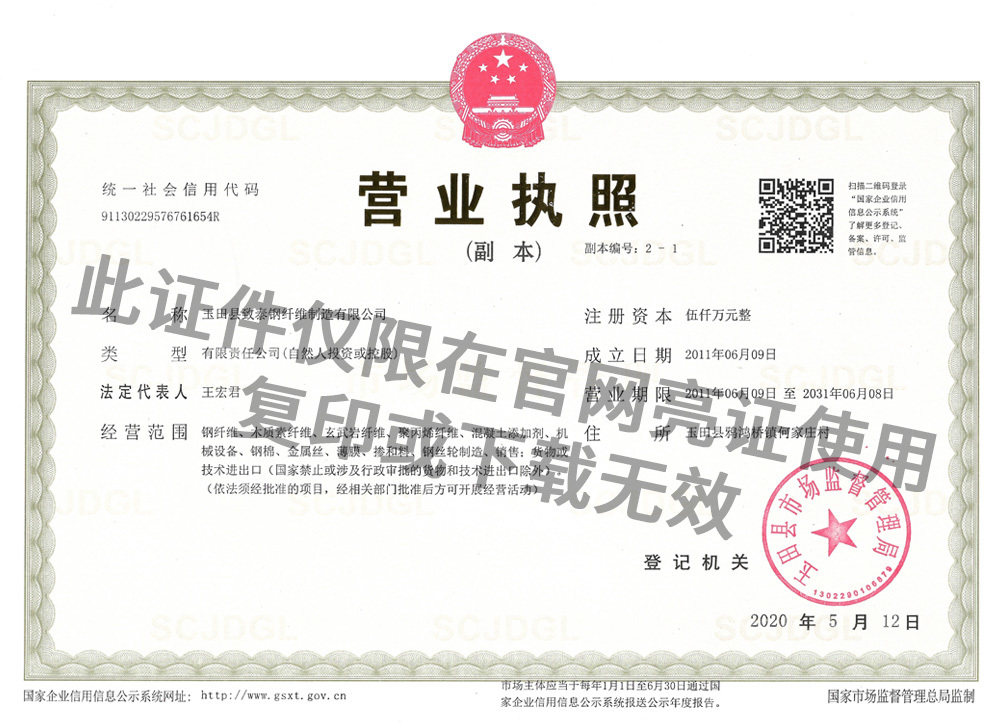
Copyright © Zhitai Steel Fiber Manufacturing Co., Ltd. |  冀公网安备 13022902000319号 | Powered by www.300.cn | SEO | Business License | Privacy Policy